

9th October 2026
Not All Friction Is Bad Friction
Featuring insights from Joe Sibal
Director of Digital Design, Storyland Studios
Every experience includes moments of friction. Pauses, transitions, and obstacles, they all shape how guests move through and interact with a space.
When those moments unintentionally appear to guests through confusing wayfinding, dead ends, or unnecessary barriers, they find themselves frustrated and the immersion breaks.
When designers hear the word “friction,” their first instinct is usually to remove it. But when friction is thoughtfully designed, it becomes something else: a source of anticipation.
Joe Sibal, Director of Digital Design at Storyland Studios, has spent his career designing user-centered digital experiences across entertainment, hospitality, and civic spaces. His work focuses on how people interact with experiences, and he’s developed a unique perspective as to how moments of waiting, transition, and interaction can go from being minimized to being part of the design that serves the larger story.
“The core idea is intentionality,” Joe explains. “It’s not about adding delays for no reason. It’s about designing moments that build anticipation or context before the experience unfolds.”
Theme Parks Have Been Doing This for Decades
This concept is nothing new in the themed entertainment industry. Queue lines at attractions are rarely just lines anymore. They can become environments filled with story, details, and discovery. A guest may spend 45 minutes waiting, but when that time is thoughtfully designed, the “waiting” actually becomes part of the experience rather than a barrier to it.
The same principle has been practiced across Storyland’s portfolio of work, where immersion is used to emphasize emotional connection to a purpose.
For example, in the non-profit experience “Poverty Encounter,” guests journey through environments resembling real low-income communities around the world, each transition helping progress the visitor experience in a forward moving narrative.
The first of those transitions takes place inside a recreated airplane cabin.
Through the windows, digital media simulates the journey from Southern California to Guatemala. The sequence provides narrative context for the scenes ahead while also helping manage the timing between groups moving through the experience.
What could have been a simple hallway between spaces instead became part of the story. Guests aren’t simply waiting to enter the next environment; they’re being transported into it.
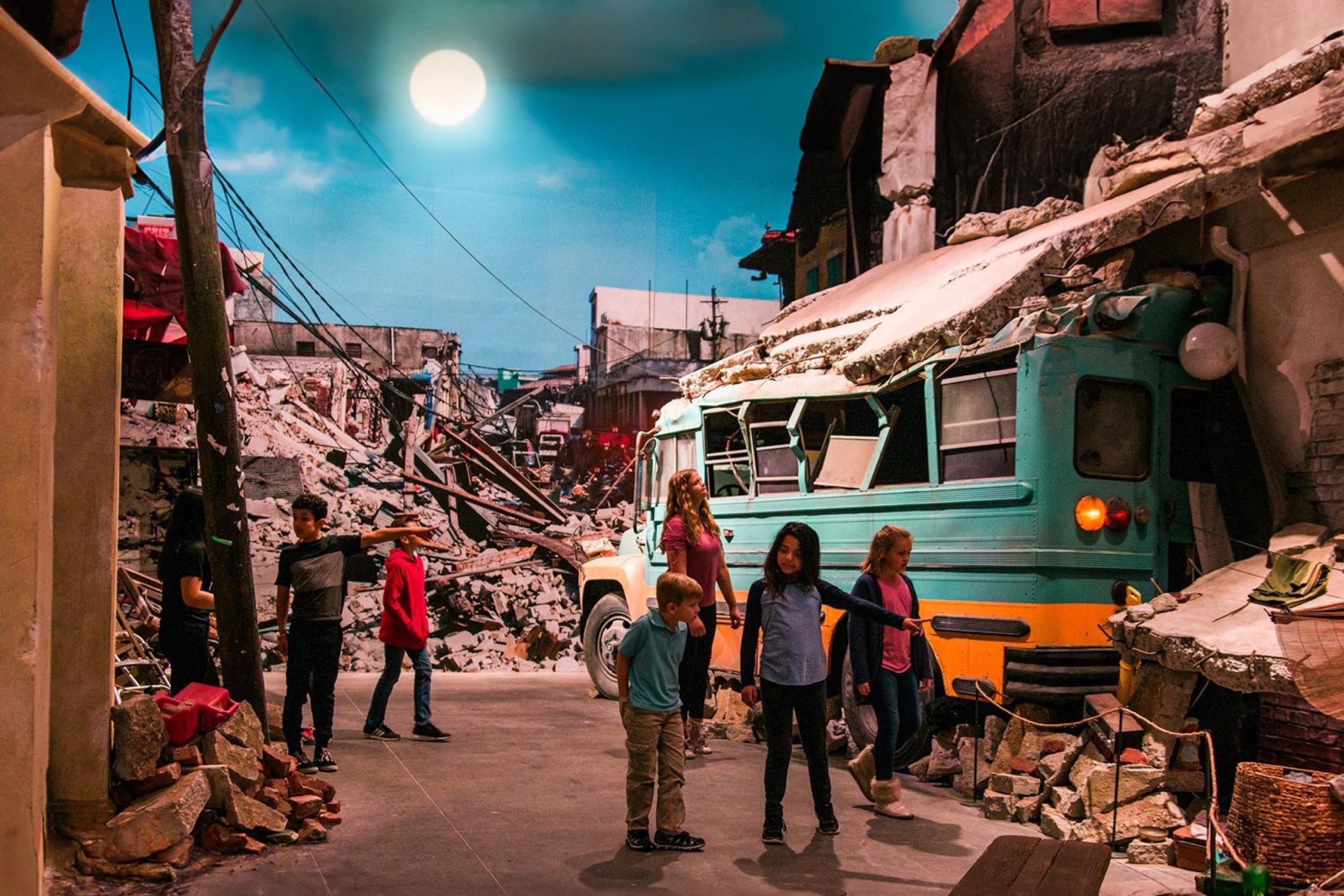
Moments like this demonstrate that not every obstacle is one to be removed. Sometimes a transition can become an opportunity to deepen the story.
“If guests have to move through an experience anyway, those transitions can become part of the story,” Joe says. “The goal isn’t simply to remove friction. It’s to use it in ways that build anticipation and enhance the overall experience.”
When Friction Becomes Frustration
Bad friction occurs when barriers appear without a clear purpose. Unnecessary obstacles, confusing transitions, moments that stall the experience without a payoff. These are disruptions, not design choices. Anyone who has ever been pulled out of an immersive environment by a poorly placed exit sign, a sightline that breaks illusion, or a queue that dumps them somewhere anticlimactic knows exactly what this feels like.
When friction isn’t connected to the story or the guest’s journey, it quickly becomes an obstacle, or worse, an intrusion.
“The worst friction is when something blocks the experience without adding anything meaningful,” Joe says. “You haven’t earned the pause. You’ve just created a barrier.”
The test is simple: does this moment serve the story? If it builds anticipation, adds context, or deepens immersion, it belongs. If it appears without purpose, it doesn’t.
The Principle Can Be Applied Anywhere
Immersive themed environments aren’t the only places where friction can be transformed into part of the experience. Across Storyland’s work, digital design helps bridge the gap between the physical environment and the stories, worlds, and experiences that guests arrive ready to engage with.
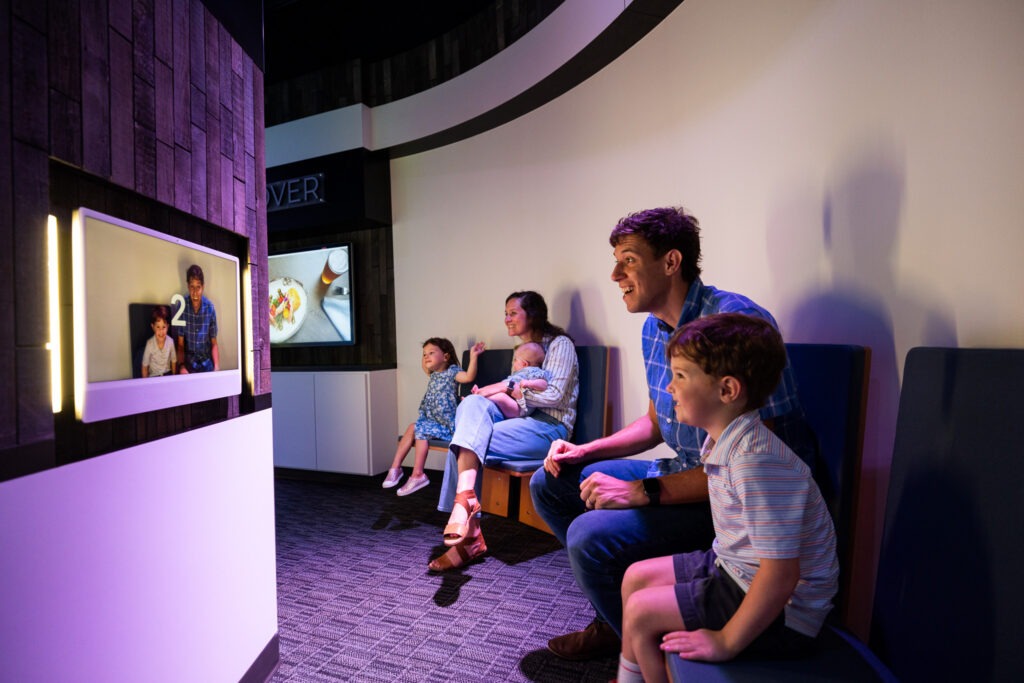
Visitor centers are usually where people grab a map and head out. Through our work with Auburn-Opelika Tourism, we set out to change that mindset. Rather than treating the region as a stop along the way, the Auburn-Opelika Visitor Experience presents the region as a destination in its own right, introducing the variety of experiences the area offers through digital touchpoints and multimedia storytelling.
What was once a customary checkpoint is now where the journey starts. Instead of a pause before the trip begins, the visit becomes its first chapter.

Design Every Moment, Not Just the Destination
Great experience design often works on a subconscious level. Visitors may not be able to explain why something feels engaging or immersive – they simply feel it.
Joe compares it to the difference between fast food and a thoughtfully prepared meal. Both may satisfy hunger, but one includes atmosphere, pacing and a sense of occasion. The journey itself becomes part of the enjoyment.
Experience design works the same way, whether that experience lives inside a theme park or on a screen. The question isn’t simply how quickly we can get someone from one point to another, but what we can give them along the way.
That thinking starts with understanding the story itself. Through Storyland’s Story Circle process, our team works with you to discover your characters, clarify the plot and distill the settings before moving into design. Establishing that foundation helps identify where the story needs to be told, where guests may need context, and where moments of interaction or anticipation can naturally occur throughout the journey.
The result is a more intentional experience. Rather than adding technology or engagement wherever there happens to be space, each moment has a purpose.
Seen this way, friction becomes part of the wider guest journey rather than something that exists in the face of it.
“The best experiences don’t treat each moment as something that exists on its own,” Joe says. “We look at the journey as a whole and ask how each moment can move the story forward. Sometimes that means removing friction, and sometimes it means using it to build anticipation. What’s important is that there’s a reason behind it.”
The most memorable experiences aren’t always the ones that get us where we’re going fastest. Sometimes, they’re the ones that make us want to see what comes next.
About Joe Sibal
Joe Sibal is the Director of Digital Design at Storyland Studios, working at the intersection of storytelling, technology, and interaction design. With a background shaped by themed entertainment and a career focused on digital platforms, he brings a cross-disciplinary perspective to what makes experiences feel seamless, and what it takes to get them there.