

10th August 2026
Designing With Water – How Can Sponge City Design Principles Stop Theme Parks From Flooding?
Written by Marie Rayner | Sustainability Lead, Storyland Studios
Featuring insights from Jeff Damron | SVP of Master Planning, Storyland Studios
Improving resilience, guest comfort, and positive impact
In this blog, I’m spotlighting Sponge Cities and exploring how these design principles can translate into themed attraction environments. Beyond creating greater resilience as we experience increasingly extreme weather events, sponge city strategies can improve guest comfort and enhance the overall visitor experience.
WHAT IS A SPONGE CITY?
It may sound unconventional, but the concept of a sponge city is very real. It is an approach to urban design that enables cities to absorb, store, and manage rainwater naturally, reducing flood risk while enhancing the surrounding environment.
Rather than relying solely on hard infrastructure to direct water away, sponge cities use integrated design strategies to slow rainfall, encourage infiltration and create spaces where excess water can be safely stored, filtered and reused.
The concept rethinks how towns, cities and even coastal communities live with water. While it has gained significant attention in recent years, it is not a new idea. China formally implemented its Sponge City Programme in 2015, with 30 pilot cities testing the approach during 2015 and 2016.
Since then, similar principles have been adopted worldwide, often under different names – for example, in the United States we talk about Low Impact Development or Green Infrastructure, while in Europe the Sponge City concept is described as ‘Nature-Based Solutions’ or ‘Cloudburst Management’.
One notable example is Sankt Kjelds Plads in Copenhagen, where urban planners replaced approximately 9,000 square metres of asphalt with rain gardens, trees and biodiverse planting. Surrounding streets were reshaped into “cloudburst boulevards”, directing stormwater safely above ground towards the harbour during extreme rainfall events.
Ultimately, sponge cities represent a shift in mindset: moving from controlling water to designing with it as an integral part of place-making and resilient urban design.
KEY DESIGN FEATURES OF SPONGE CITIES
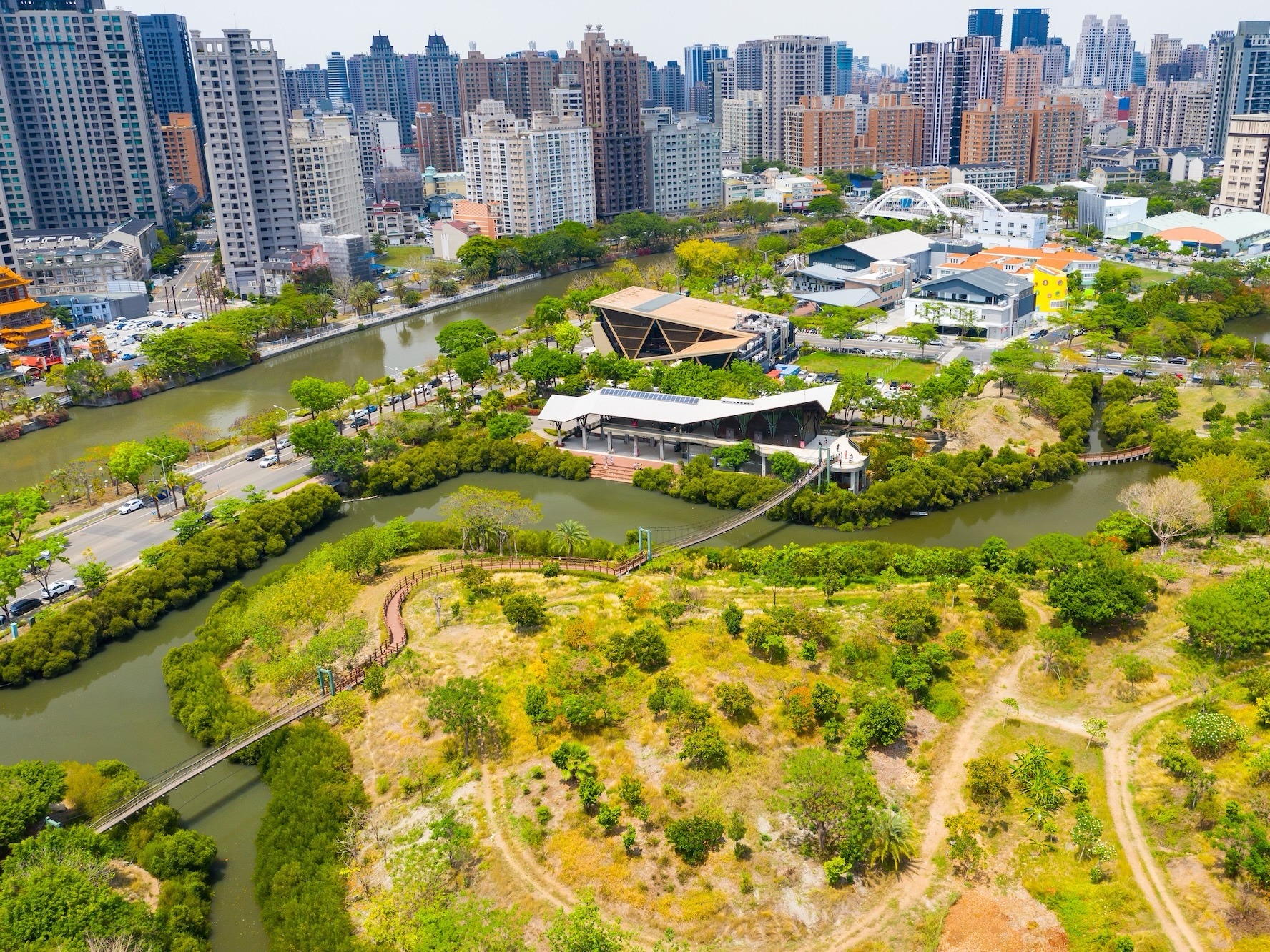
Sponge cities rely on a toolkit of design elements that mimic natural water systems. Together, these features capture, filter, store and gradually release rainwater using:
- Permeable pavements – Surfaces that allow rainwater to soak into the ground, reducing runoff.
- Rain gardens – Landscaped depressions that capture and filter stormwater through vegetation and engineered soils.
- Bioswales – Planted channels that convey, slow and treat runoff.
- Green and blue roofs – Roof systems that either absorb rainwater through planting (green roofs) or temporarily store it (blue roofs).
- Terraced riverbanks and floodplains – Naturalised landscapes that accommodate rising water levels during storm events.
- Urban green corridors – Connected landscaped networks that guide water through the city in a controlled and natural way.
These systems do more than manage rainfall; they help to build long-term climate resilience.
MORE THAN FLOOD DEFENCE
Flood prevention may be the most visible benefit of sponge city design, but it is only part of the story.
Nature-based water management systems can help cool urban environments, improve air quality, enhance wellbeing and support biodiversity. By capturing, storing and reusing rainwater locally, they also help communities balance common extremes of drought and flooding.
Instead of treating stormwater as a waste product, sponge cities recognise it as a valuable resource.
SO, WHAT DOES THIS MEAN FOR THEME PARK DESIGN?
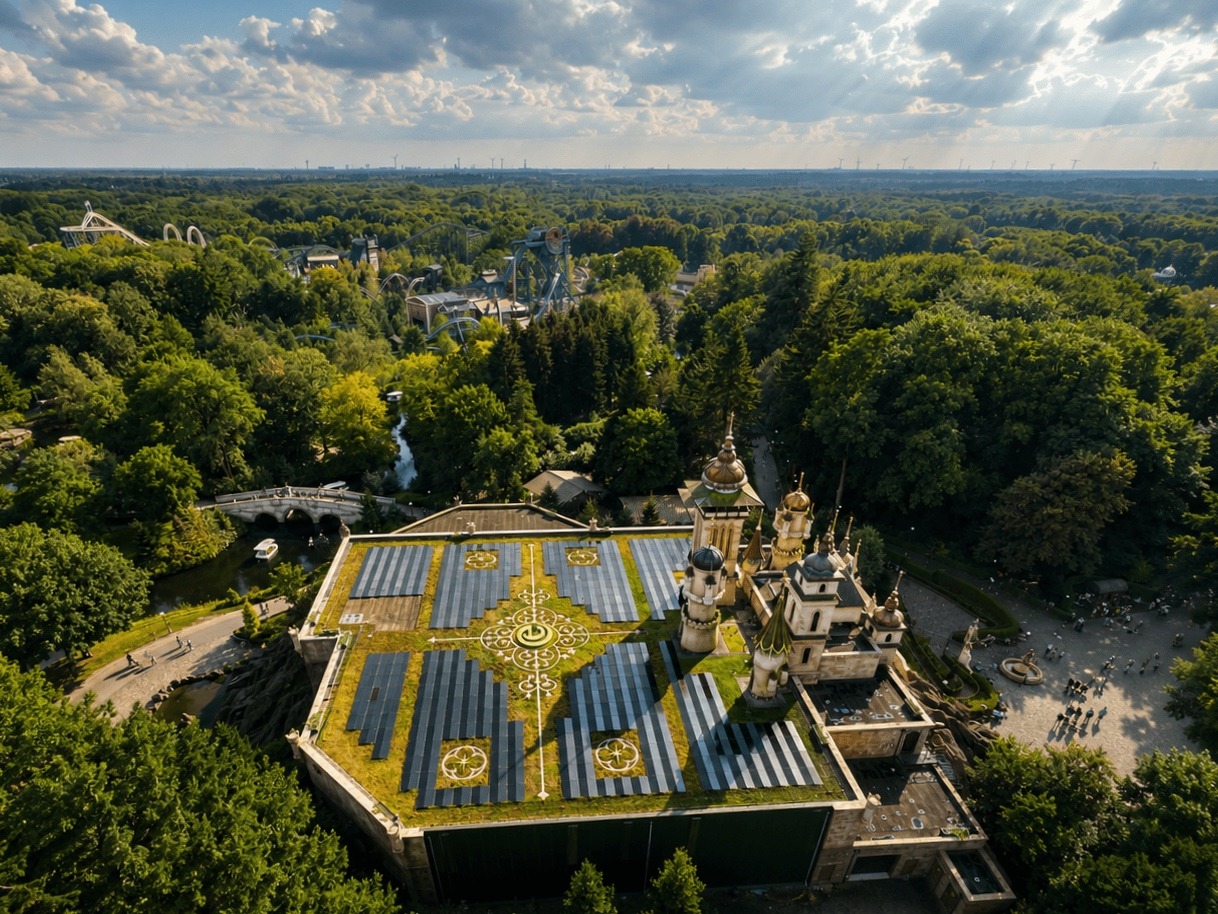
Theme parks provide an ideal setting for sponge city principles. Vast areas of impermeable surfaces – including car parks, pedestrian pathways and large show-building roofs – can generate significant volumes of stormwater runoff.
By integrating blue-green infrastructure, many of these functional systems can become immersive, guest-facing features.
Hardscape Design: Traditional asphalt surfaces can be replaced with permeable paving materials such as porous pavers or pervious concrete. Car parks can be reimagined with planted bioswales and landscaped islands that absorb rainfall while filtering pollutants.
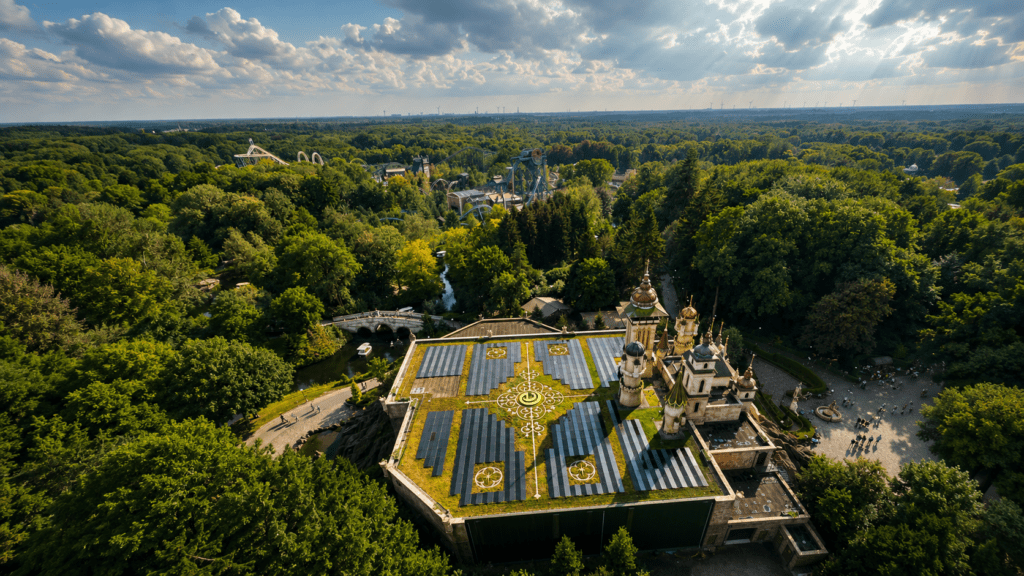
Architectural Integration: Green and blue roofs offer significant potential across large show buildings, hospitality facilities and queue areas. These systems can absorb or temporarily store rainwater while improving thermal performance, reducing cooling demand and enhancing guest comfort.
Landscape and Immersive Environments: Lakes and lagoons can serve as active water-storage basins, designed to accommodate fluctuations in rainfall. Terraced edges can create flexible spaces that function as seating during dry periods while providing additional stormwater capacity during wetter conditions.
The result is infrastructure that is both functional and experiential – supporting sustainability goals while strengthening storytelling and placemaking.
GLOBAL EXAMPLES IN PRACTICE
Many leading parks and destinations already incorporate elements of sponge design, often driven by sustainability objectives or local regulations.
For example, Efteling in the Netherlands is Guided by a principle that only ~10–12% of its site is developed, Efteling preserves the majority of its landscape as a functioning natural “sponge.” Its closed-loop water system uses reed beds and wetland filtration in place of chemical treatment.
In Spain, Port Aventura operates in a water-scarce region, and this B Corp resort uses a circular water network that enables approximately 20% of total consumption to come from reclaimed sources.
Universal Beijing Resort, China, was the first theme park resort to achieve LEED Gold for Communities
Our SVP of Masterplanning, Jeff Damron, worked on Universal Beijing during his tenure at AECOM:
“When designing Universal Beijing, our ambition was to make sustainability a core part of the resort experience. We integrated China’s sponge city principles throughout the masterplan, delivering 86,000m² of wetlands, 170 hectares of green space and an on-site treatment facility that recycles more than 1.4 million m³ of water annually. The project proved that world-class destinations can achieve outstanding environmental performance, and it continues to shape our approach to projects around the world.”
Jeff Damron – SVP Architecture, Masterplanning and Design
Theme parks are already taking these principles into account during the design phase, and the results are proven.
HOW DOES THIS ELEVATE THE GUEST EXPERIENCE?
Water-sensitive design, when thoughtfully integrated into the guest journey, can deliver benefits that extend well beyond sustainability.
Outside China, there is currently no widespread requirement for existing parks in e.g. the UK, Europe or North America to retroactively adopt sponge city principles. This creates an opportunity.
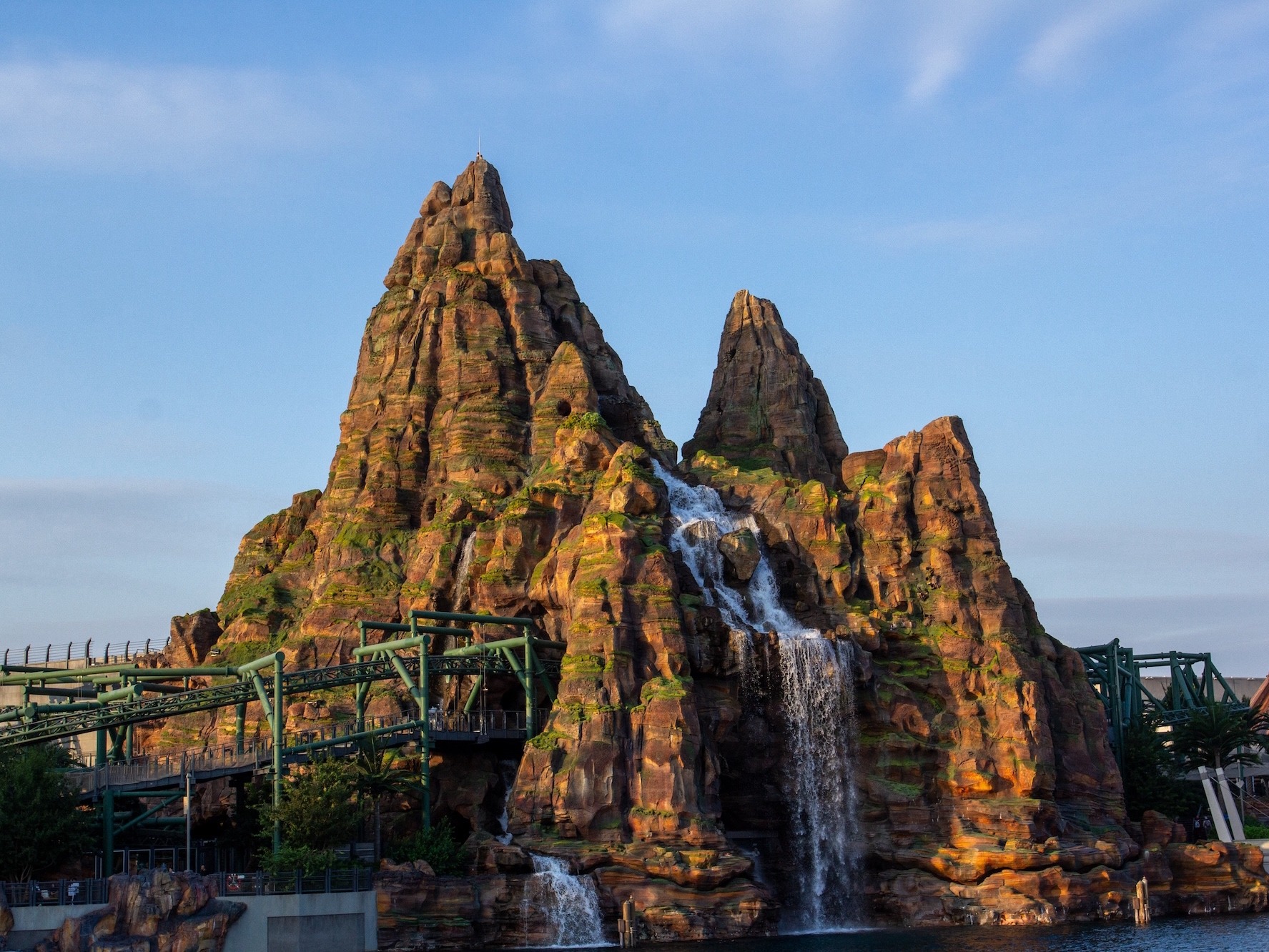
Much of today’s infrastructure is designed to remain invisible, hidden from the guest experience. Nature-based solutions offer a different opportunity: they can become part of the story itself. Rather than concealing these systems, attractions can embed them into the narrative and make them part of the guest journey. In doing so, infrastructure becomes a living element of the attraction that sparks curiosity, deepens connections to place, and creates moments of discovery.
Interactive features within attractions and queue lines could demonstrate how water is captured, filtered and reused, turning sustainability into an engaging educational experience. Rain gardens could double as water-play environments, helping guests cool down while showcasing natural filtration processes.
Green roofs, living walls and enhanced landscape shading can reduce local temperatures and create a more comfortable environment for guests, particularly in high-density areas such as queues and plazas.
Looking ahead, advances in AI and smart infrastructure offer additional opportunities such as real-time monitoring systems which anticipate rainfall events, manage water levels proactively and automate responses before storms occur. This can minimise disruption, helping parks maintain a seamless guest experience.
SUMMARY
Rather than treating rainfall as a problem to be managed, sponge city design positions water as a resource to be harnessed.
At Storyland Studios, this is exactly the type of challenge that benefits from a multidisciplinary lens – identifying how sustainability initiatives can simultaneously improve resilience, enhance guest experience and deliver lasting environmental impact.
By embedding these principles into the guest journey, water management can move beyond hidden infrastructure and become a visible, engaging and meaningful part of design.
In doing so, theme parks can become living testbeds for sustainable innovation—sparking guest curiosity, influencing wider industry practices and creating a ripple effect of positive change.