

22nd October 2026
World Builders: Jon Storbeck
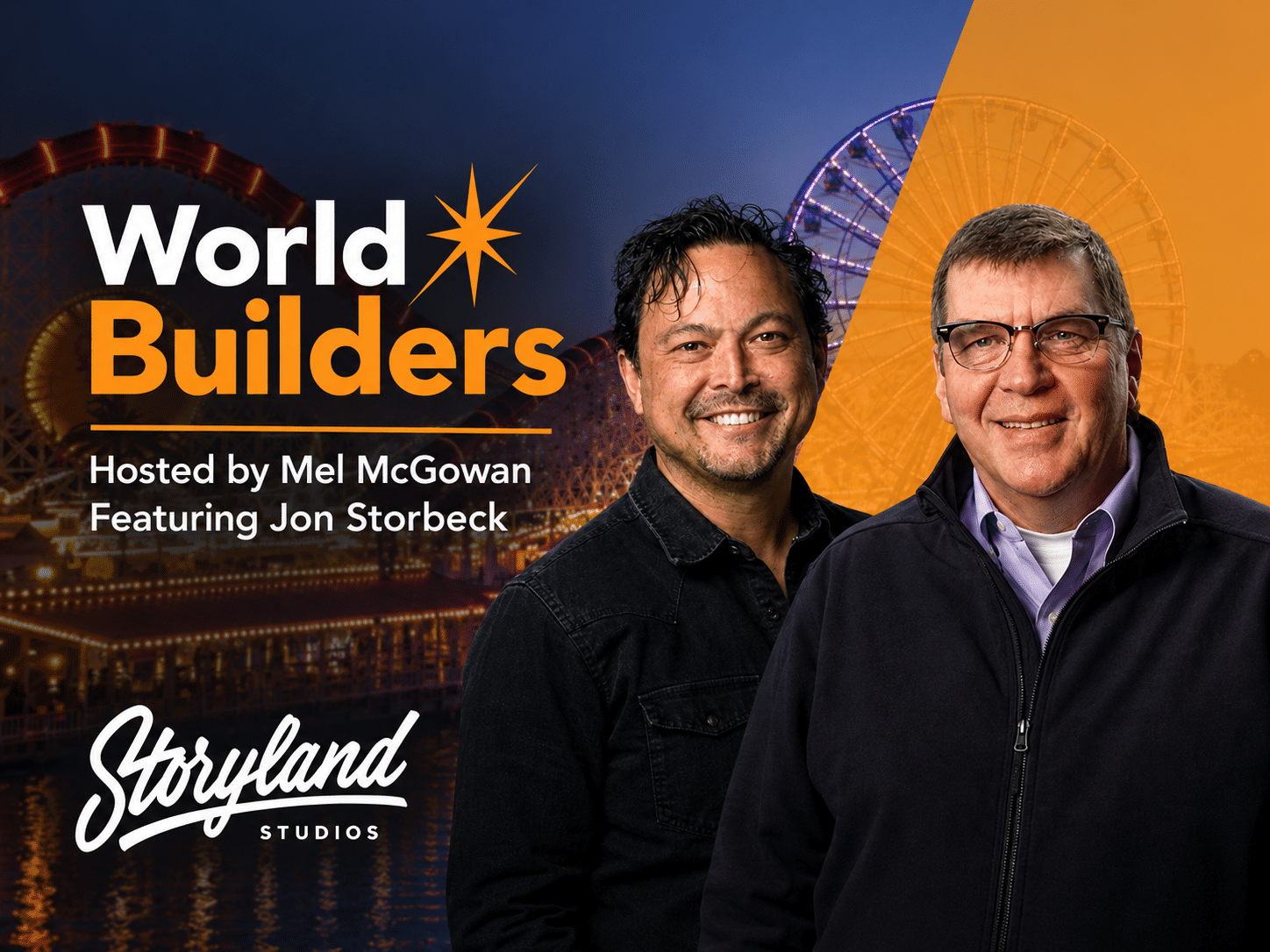
A Storyland Studios interview series. Mel McGowan sits down with the people who built the places we love. First up: Jon Storbeck.
In 1983, a marketing grad from Cal State Long Beach clocked in for his first shift at Disneyland as an attractions host. Thirty-three years later, he was running the entirety of Walt Disney’s original park. Then Jon Storbeck did something unexpected: he crossed town to Knott’s Berry Farm, a completely different kind of park, and took up the happy work of carrying a family’s legacy forward.
Storbeck built his career on the operations side, the side that has to make the magic actually happen at 11 a.m. on a hot Tuesday, with the line forty minutes deep and a kid melting down by the churro cart. It is not the side that gets the magazine covers, but it is the side that decides whether the park’s promise survives contact with a real crowd. Ask him what makes a theme park successful and he doesn’t reach for the rides, or the technology, or the IP. He says one word: “People.”
I. PEOPLE
Mel McGowan: What makes a theme park successful?
Jon Storbeck: People. Starting with the designers and creative people who have a vision; the marketers who communicate that vision to guests; the finance people who figure out how to pay for it. And then your operators, the frontline people who deliver it. And, last but not least, it takes the guests. They’ve worked hard for their money, and they want to give it to you. Without all of those people involved, none of it happens. When you forget that, you see a decline. When you remember it, you see them thrive.
Storbeck came up through operations, but he learned to prize the whole ensemble from the founding generation of the industry, the pioneers whose names now sit on windows and plaques.
Mel McGowan: You and Imagineering legend Marty Sklar once hosted a panel together, “Operations versus Creative”. Tell me about that.
Jon Storbeck: That’s right. I was really blessed in the latter part of my career. I got to know Ron Dominguez, Jack Lindquist, Marty Sklar, Jim Cora, titans in our industry, and I was mentored by them late in their careers. Marty came up with the idea of the two of us doing a back-and-forth on operations and creative. It was fun, because we played off each other and looked at some genuine issues from completely different perspectives. He was a really phenomenal human being and a great mentor.
II. A SENSE OF PLACE
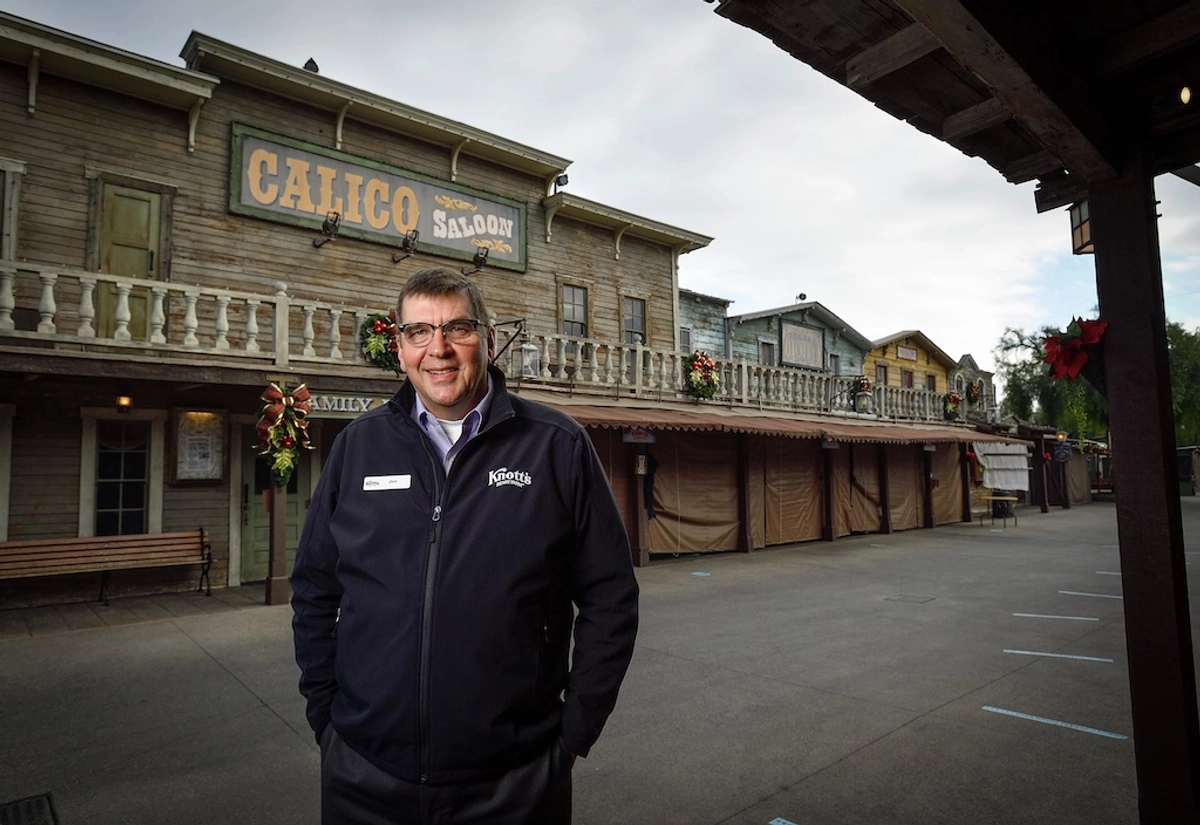
Every world builder eventually has to answer the same question: how do you make a place feel real? For Storbeck, authenticity isn’t a finish you apply at the end. It’s a decision you make before you pour the first foundation.
Mel McGowan: How do you ensure an authentic sense of place, balancing the nostalgia of a Knott’s or a Disneyland with the appetite for brand-new experiences?
Jon Storbeck: It starts with what story you’re trying to tell. Are you trying to tell a historical story? A contemporary story? A story that hasn’t been told yet? If you understand that correctly, a lot of things flow from it: what language the cast members use, what’s in the planters, what the background music is. Not everybody can do all of those things. You don’t necessarily have the money to do all of it, so you start picking and choosing. Maybe I’ll forego the trash can, but I want to make sure the background music is right, or that the language the employees are using is right, because that’s all I can do with my resources. But you immerse them in that story, and then I think they intuitively get it. The important thing is to suspend disbelief.
III. WHY THEY COME BACK
A first visit is a transaction. A second, a third, a tenth visit is a relationship. Storbeck has thought hard about the difference, and he measures it in a currency that never shows up on a P&L.
Mel McGowan: How do you bring guests back again and again? And how do you give them something new without taking away the nostalgic thing they already love?
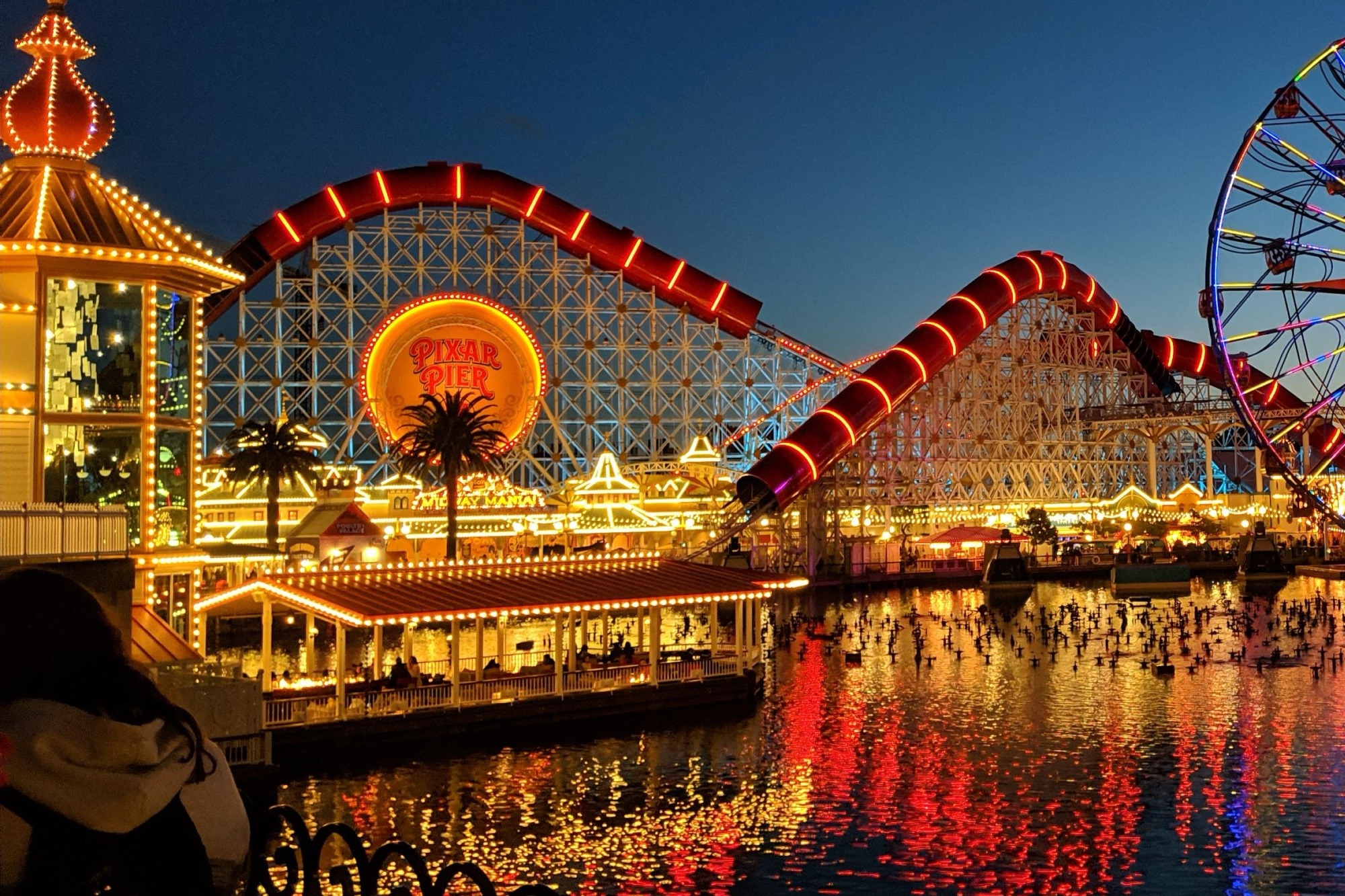
Jon Storbeck: The reason guests come back is how you make them feel. There’s a value proposition there. If I’ve turned over my hard-earned money, how do I feel when I walk out that gate? Am I joyous? Have I experienced this place with my family, friends and loved ones creating memories that will last a life time?
I used to say this at Disneyland all the time – if there’s one thing I want the cast members to remember, it’s quite simply: for that guest you’re dealing with, you create happiness.
So the rides are, no pun intended, a vehicle for feelings. Ultimately guests tell you when something doesn’t make them feel the way you intended, and they don’t go on that ride, or to that shop. The smart operators look at that and say, “That’s ready for retirement,” and put a new story in its place.
But to me, it’s really about the emotions I feel and the people I love sharing those moments with.
“So the rides are, no pun intended, a vehicle for feelings.”
IV. THE INHERITANCE
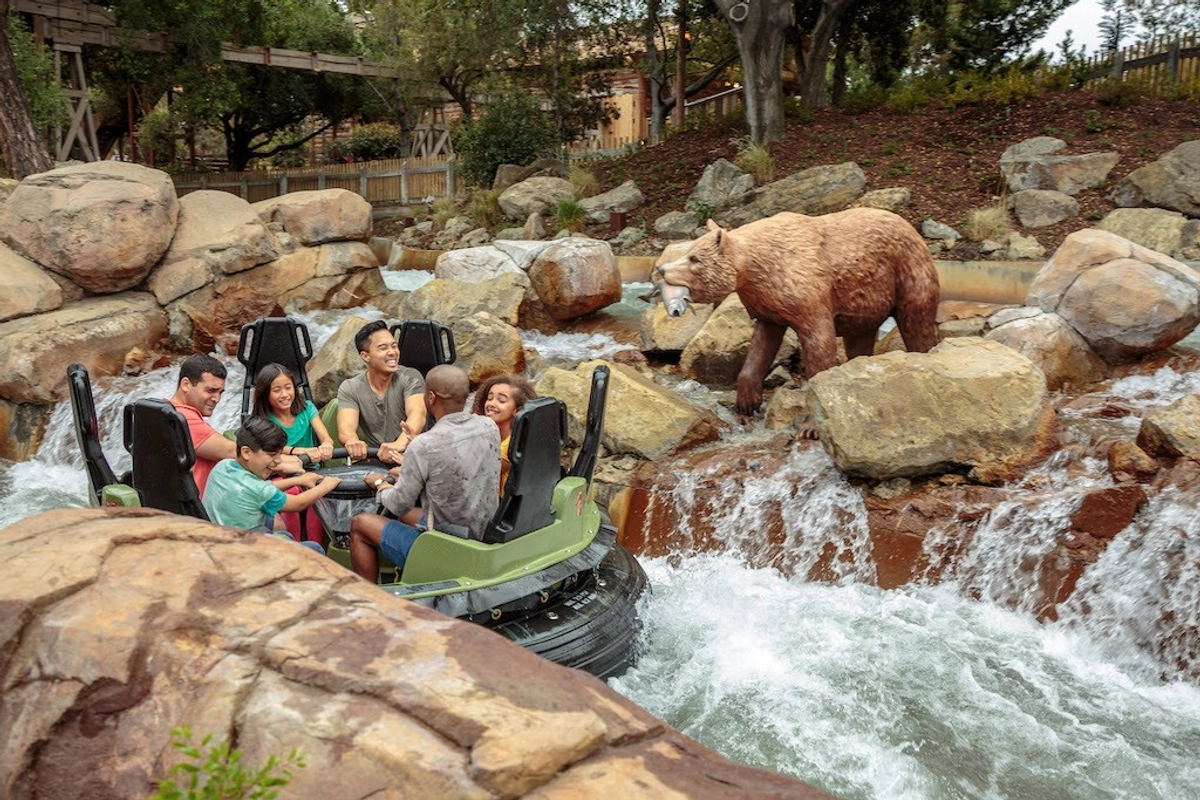
If one theme runs under everything Storbeck says, it’s this one. He spent three decades inside the most resourced park operation on earth, then took over one a single family had built from a berry stand and a fried-chicken dinner. What he found was something to steward.
Mel McGowan: Being entrusted with these cultural, historic assets, Disneyland, the Disneyland Hotel, Knott’s Berry Farm, means someone loves you or trusts you, because those are extraordinary things to have in your care.
Jon Storbeck: Absolutely. The stories behind Knott’s parallel those around Disneyland: entrepreneurs, risk-takers, doing things nobody else had done. I came to appreciate Knott’s more and more. It’s a different business model, closer to the ground, with fewer resources than a Disney park, so you had to be a sharper businessperson to run it. The lucky thing for me was that Raffi Kaprelyan was there, with his history and his love of that park. He coached me on the differences between Knott’s and a Disney park, and the challenges post-COVID, a great partner to have. And it’s the inheritance. The Knott family built up all those traditions, and when they sold to Cedar Fair, there were still plenty of people steeped in it.
They had given you the sense that you’d inherited something. And like all inheritance, do you want to take care of it and grow it and pass it on to the next generation, or do you want to blow it? The smart people latched onto what the founders passed down and said, “Keep it up, move it ahead with the times, and make sure I can pass it on.” There are still people there who predate Cedar Fair, Rafi among them, keeping that going.
“Do you want to take care of it and grow it and pass it on to the next generation, or do you want to blow it?”
That’s the through-line of a world builder, whether Jon would use the phrase or not: people build the place, story makes it real, feeling brings them back, and the whole thing thrives when someone decides it’s worth keeping. Jon Storbeck spent four decades proving it, one hot Tuesday at a time.
World Builders will continue.
World Builders is an interview series from Storyland Studios, hosted by co-founder and Chief Creative Officer Mel McGowan.